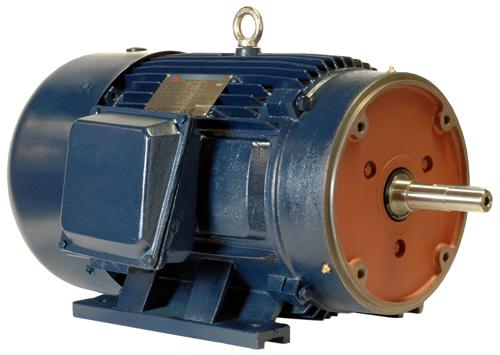
Closed coupled motors, also called close coupled pump motors, mount directly to a pump housing so the motor shaft drives the impeller without a separate coupling, creating a more compact and efficient assembly. 3BG Supply Co. stocks close-coupled pump motors in a range of horsepower and frame sizes for centrifugal pump applications. If your system uses a different pump configuration, our broader AC pump motors and electric motors selections may also be worth a look. Contact our team for help finding the right close coupled motor for your pump.
0
0
0
0
Find the right Closed Coupled Motors for your needs.

0
FAQs
What is a closed coupled motor?
A closed coupled motor is an electric motor designed to mount directly onto a pump housing, with the motor shaft connecting straight to the pump impeller. This eliminates the need for a separate shaft coupling, resulting in a more compact and simpler installation.
What is the benefit of a close coupled pump motor design?
Close coupled pump motors reduce the overall footprint of a pump assembly, simplify alignment since there is no separate coupling to adjust, and can lower maintenance requirements compared to base-mounted pump and motor configurations.
What applications use close-coupled pump motors?
Close-coupled pump motors are commonly used in centrifugal pump applications across water treatment, HVAC, industrial fluid handling, and general-purpose pumping systems where a compact, direct-drive design is preferred.
What is a close-coupled pump with a canned motor?
A close-coupled pump with a canned motor uses a sealed, leak-proof motor design where the motor's rotor is enclosed in a thin, non-magnetic can, eliminating the need for a shaft seal. This design is often used for handling hazardous, corrosive, or hard-to-seal fluids.
Industrial Closed Coupled Motors Manufacturers
Your Trusted Source for MRO Supplies from Top Brands